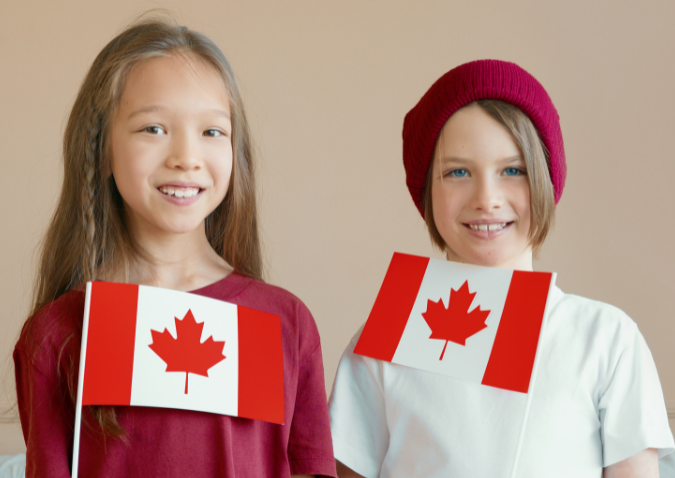


Minors always require special attention and care from adults, as they do not yet have the capacity to fully protect themselves or make necessary decisions on their own. International travel is no exception — whether accompanied by an adult or travelling alone, thorough preparation before departure is essential. Most countries' border authorities have specific procedures for the entry or exit of children, including unaccompanied minors, in order to protect children from trafficking or abduction. Below are some of the rules that apply when minors travel to and from Canada.
1. What Counts as a Minor
In Canada, a minor is someone under the age of 16, 18, or 19, depending on the province.
- Provinces that define a minor as someone under 18: Alberta, Manitoba, Ontario, Quebec, Prince Edward Island
- Provinces that define a minor as someone under 19: British Columbia, Nova Scotia, New Brunswick, Northwest Territories, Yukon, Nunavut
- A province that defines a minor as someone under 16: Newfoundland
- A province that defines a minor as an unmarried person under 16: Saskatchewan
2. Documents to Prepare
The first step is to contact the nearest embassy or consulate of the destination country to find out whether there are specific entry or exit requirements for minors. You can find contact information for foreign diplomatic missions and consular offices in Canada here.
2.1. Required Document: A Canadian Passport
A Canadian passport is a travel document that Canadian citizens may apply for. A minor travelling outside Canada needs their own passport. A child's passport is valid for a maximum of 5 years and cannot be renewed. If a child's passport has expired and is needed, a new one must be applied for. A child's passport remains valid until its expiry date, even after the child turns 16.
Note: A dual-citizen child must have a Canadian passport to board a flight to, or connect through, Canada by air.
The following persons may apply for a passport on behalf of a child:
- one of the child's parents (if not separated or divorced);
- the parent with custody (if separated or divorced);
- the child's legal guardian.
If a parent or legal guardian is concerned that someone might try to obtain a passport for the child without their consent, they can register the child's name on a passport monitoring watch list. This helps ensure the child's safety and reduces the risk of child abduction by putting additional safeguards in place before a child's passport application is processed, and by verifying that the application has the consent of the parent or legal guardian.
Documents required when applying for a child's passport:
- Passport application form;
- Proof of the parent-child relationship: a birth certificate listing the parent(s)' names, a court adoption order listing the adoptive parent(s)' names, a foreign birth certificate listing the parent(s)' names, or other documents if required;
- Proof of custody, separation, or divorce: all legal custody documents relating to custody, mobility, and access rights, and a copy of the divorce judgment or order (if the parents are divorced);
- Proof of Canadian citizenship: all documents submitted must be originals, including the provincial or territorial birth certificate (if the child was born in Canada) or a Canadian citizenship certificate (whether the child was born in or outside Canada).
The fastest processing time for a child's passport is as little as two (2) business days, depending on individual circumstances.
2.2. Supplementary Documents
- A consent letter from the child's parent(s) or legal guardian confirming that the child is permitted to travel outside Canada alone or with another person.
The purpose of the consent letter is to show that a child travelling alone, or with only one parent, a guardian, friends, relatives, or a group, has the permission of the parent (or legal guardian) who is not accompanying them on the trip.
A consent letter is not a strict legal requirement, but it may be requested at any time by immigration authorities upon entry or exit from a foreign country, by airline agents, or by the Canada Border Services Agency upon entry into Canada.
The content of the consent letter should include full details such as the full name, passport number, and planned departure date of the accompanying traveller. The consent letter must be signed by: one or both married or biological parents living with the child; one or both separated, divorced, or non-cohabiting parents; or the legal guardian. There is no prescribed form for the consent letter — you may draft it yourself or refer to the sample consent letter here, and it should have the signature certified by a Notary Public.
- Additional identification documents, such as a birth certificate or citizenship certificate, passport, or permanent resident card.
- Other legal documents, if applicable, such as a divorce decree, a court custody order, or a parent's death certificate.
3. Considerations for Children Travelling by Air
Taking a child on an air trip requires careful planning and preparation. You must also comply with specific rules for flying with children (each adult may be responsible for only one (1) infant, meaning a child under 2 years old) and use an approved child safety restraint system (car seat) on board, and bring all necessary supplies for the child before boarding: food, diapers, and so on. Be mindful not to bring prohibited items on board, such as liquids (gel packs or ice packs) for children aged 2 and older, or toys that resemble real weapons.
For a child travelling alone:
- Confirm in advance whether the airline provides an escort and supervision for the child from check-in through to arrival.
- Find out about any restrictions, such as age limits, for unaccompanied minors.
- Make sure the parent or guardian remains at the airport until the flight has departed (per the airline's policy).
- Make sure the person meeting the child upon arrival carries proper identification and appropriate authorization.